Category: Tattoo Wisdom & Care
Business: Darkline Art Salon
How to prevent tattoo blowout in fine-line art is the most critical skill a modern tattooist can master. As the demand for delicate, “micro” aesthetics grows across the USA, so does the risk of the dreaded “blur.”
A blowout occurs when ink is deposited too deeply into the subcutaneous fat layer, causing the pigment to spread like a watercolor stain under the skin. At Darkline Art Salon, we believe that precision isn’t just an aesthetic choice, it’s a technical necessity. This guide breaks down how to maintain those crisp, needle-thin lines that stand the test of time.

“Fine-line tattooing is a game of millimeters; one wrong move and the art is lost to the anatomy.” – Tattoo Artist Magazine
Understanding Skin Anatomy and Ink Depth
To master how to prevent tattoo blowout in fine-line art, you must understand the “sweet spot.” The human skin consists of the epidermis, dermis, and hypodermis (fat). For a permanent, crisp line, the ink must sit squarely in the dermis.

If you don’t go deep enough, the tattoo will fade away as it heals. If you push the needle too far down, you hit the fatty layer of the skin. Because the cells in that layer are spread out, the ink starts to bleed sideways, which is what creates a blurry blowout.
Master the Dermal Depth Control
The biggest secret to preventing tattoo blowout in fine-line art is keeping your needle at a steady, shallow depth. Fine-line tattoos usually require very small, thin needles. Because these needles are so sharp, they glide into the skin without much effort. This makes it very easy to accidentally push too deep and hit the wrong layer of skin.

“Precision is the only remedy for the unpredictability of human skin.” – Lars Krutak, Tattoo Anthropologist
The Role of Proper Voltage Settings
Using high voltage with a slow hand speed is a recipe for disaster. If your machine is hitting too hard and too fast, the needle will naturally penetrate deeper than intended.
- Low Voltage: Allows for better control.
- Steady Hand: Matches the machine’s cycle to your movement.
- Minimal Trauma: Prevents the “chewed up” skin look.

Why Needle Angle Matters for Fine Lines
How to prevent tattoo blowout in fine-line art often comes down to the angle of entry. A 90-degree (perpendicular) angle is the safest bet. When you angle the needle (sloping), you increase the surface area of the puncture and the likelihood of the ink “sliding” under the dermal layer into the neighboring tissue.

The Art of the Gentle Skin Stretch
You cannot pull the skin too tight. While a “drum-tight” stretch is taught for traditional work, fine-line art requires a firm but gentle stretch. Over-stretching thins the skin layers even further, making it nearly impossible to judge depth accurately.

Comparing Needle Types and Their Risks
Choosing the right tool is half the battle. While single needles are popular, they are the most “unforgiving” tools in the industry.
Table 1: Needle Grouping Blowout Risk Assessment
| Needle Type | Penetration Resistance | Blowout Risk | Best Use Case |
| Single Needle (1RL) | Very Low | High | Ultra-fine details |
| 3 Round Liner (3RL) | Moderate | Medium | Standard Fine-line |
| Tight 5 RL | High | Low | Bold Fine-line/Script |
Caption: A comparison of how needle groupings affect depth control and blowout potential.
Avoid Overworking the Canvas
How to prevent tattoo blowout in fine-line art involves knowing when to stop. If you pass over a line three or four times, the skin becomes “mushy.” This trauma causes immediate swelling, which can actually “trap” the ink and then push it into a blowout as the swelling subsides. Limit yourself to 1–2 passes.

“The best line is the one drawn once. The second pass is a risk; the third is a mistake.” – Inked Magazine
Identifying High-Risk Body Placements
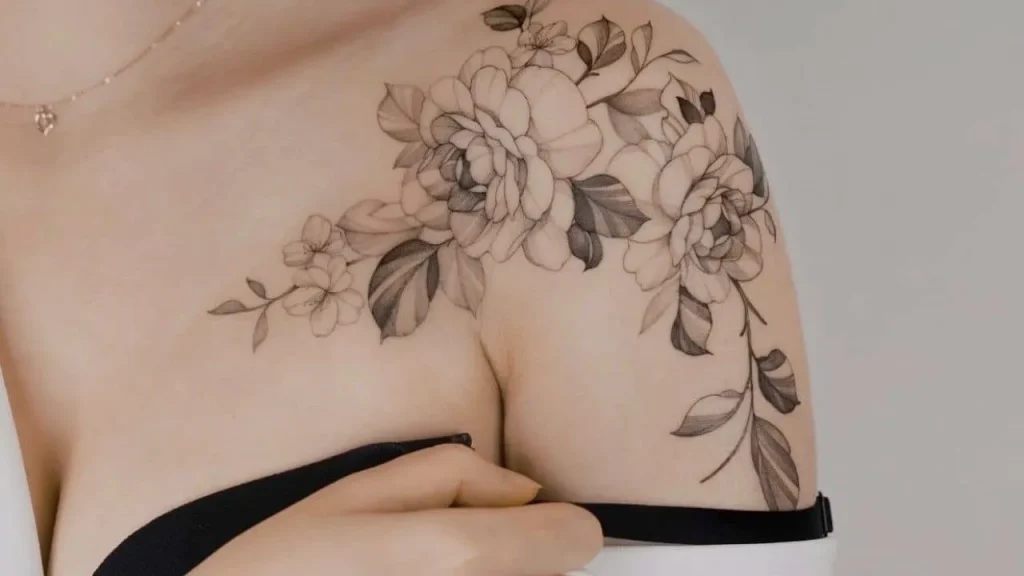
Not all skin is created equal. Areas where the skin is thin and sits directly over bone or fat are “Blowout Zones.”
- Inner Bicep/Wrist: Extremely thin skin.
- Ankles/Feet: Prone to migration due to circulation and thinness.
- Ribs: Constant movement and thin dermis.
Choosing the Right Ink Consistency
Thin, watery inks spread faster. For fine-line work, many artists prefer a slightly higher pigment load with a stable carrier. This ensures that the small amount of ink deposited stays exactly where the needle left it.

Hand Speed vs. Machine Speed
The “pendulum” of your hand must match the “vibration” of your tool. If your hand moves slower than the machine, you are depositing too much ink in one spot, leading to “saturated blowouts.”
Aftercare: The Client’s Responsibility
How to prevent tattoo blowout in fine-line art doesn’t end when the artist puts the machine down. Excessive friction, tight clothing, or over-moisturizing in the first 48 hours can cause the ink to shift.

“A tattoo is a partnership. The artist creates it; the client preserves it.” – Skin Art Magazine
Comparison of Fine-Line vs. Traditional Techniques
Understanding the difference helps in adjusting your physical pressure.
Table 2: Technical Differences in Execution
| Feature | Fine-Line Technique | Traditional Technique |
| Needle Depth | Strict $1.0\text{mm} – 1.5\text{mm}$ | $1.5\text{mm} – 2.0\text{mm}$ |
| Voltage | Lower (5V – 7V) | Higher (7V – 9V) |
| Skin Stretch | Gentle/Moderate | Maximum Tension |
| Passes | Single Pass Preferred | Multiple Passes/Sculpting |
Caption: Contrast between delicate fine-line requirements and high-saturation traditional work.
Recognizing a Blowout in Progress
If the skin turns “shiny” or “greyish-blue” immediately around the needle track, stop. This is a sign of tissue distress. It is better to leave a line slightly light and touch it up later than to push for depth and cause a permanent blur.

Training Your Eye for Skin Resistance
Every client is different. Older skin loses elasticity, while younger skin is more resilient. How to prevent tattoo blowout in fine-line art requires “feeling” the vibration of the needle as it hits the dermis. It should feel like a slight “pop”- if it feels like cutting butter, you’ve gone too deep.

“Listen to the skin; it speaks in resistance and color.” – The Modern Tattooist Quarterly
The Golden Rules of Precision
To wrap up how to prevent tattoo blowout in fine-line art, remember: Depth, Angle, and Speed. Use a 90-degree angle, maintain a $1\text{mm}$ depth, and match your hand speed to a lower voltage. At Darkline Art Salon, we prioritize these technical markers to ensure every piece of fine-line art remains a masterpiece for decades.

Conclusion & Call-to-Action
Mastering fine-line art is a journey of discipline. By focusing on dermal precision and respecting the skin’s limits, you can create breathtaking, ethereal designs without fear of ink migration. Ready to get a piece that stays sharp? Book your consultation at Darkline Art Salon today and experience the precision of expert fine-line artists.

How to Prevent Tattoo Blowout in Fine-Line Art: The Ultimate Artist’s Guide to Crisp Lines
External Links
- Society of Tattoo Artists – Technical Standards
- Dermatology Times: Tattoo Pigment Migration Research
- Tattooing 101: Fine Line Fundamentals
Frequently Asked Questions
Q: Can a tattoo blowout be fixed?
A: Not easily. You can often “camouflage” it with a darker design or use laser therapy to fade the migrated ink.
Q: Does it always mean the artist messed up?
A: Usually, depth is the cause, but very thin skin or poor client aftercare (excessive pulling) can also contribute.
Q: Which body part is most likely to blow out?
A: The inner wrist and the top of the foot are notorious due to the extremely thin skin layer.
Q: How soon can you see a blowout?
A: Sometimes immediately, but most “blurring” becomes fully visible within 24 to 72 hours after the session.